
March in Andalucía carries a different kind of energy.
The light softens. Evenings stretch longer. And across towns, cities and villages, preparations quietly begin for one of the most powerful cultural moments of the year.
Semana Santa — Holy Week — is not a festival you stumble across by chance. It arrives with intention, emotion and ceremony. Streets become candlelit processional routes. Drums echo through historic centres. Silence and spectacle exist side by side.
If you’re visiting southern Spain in spring, this is something worth planning around. If you’re considering life here, it’s often the moment people realise just how deeply culture is lived — not staged.
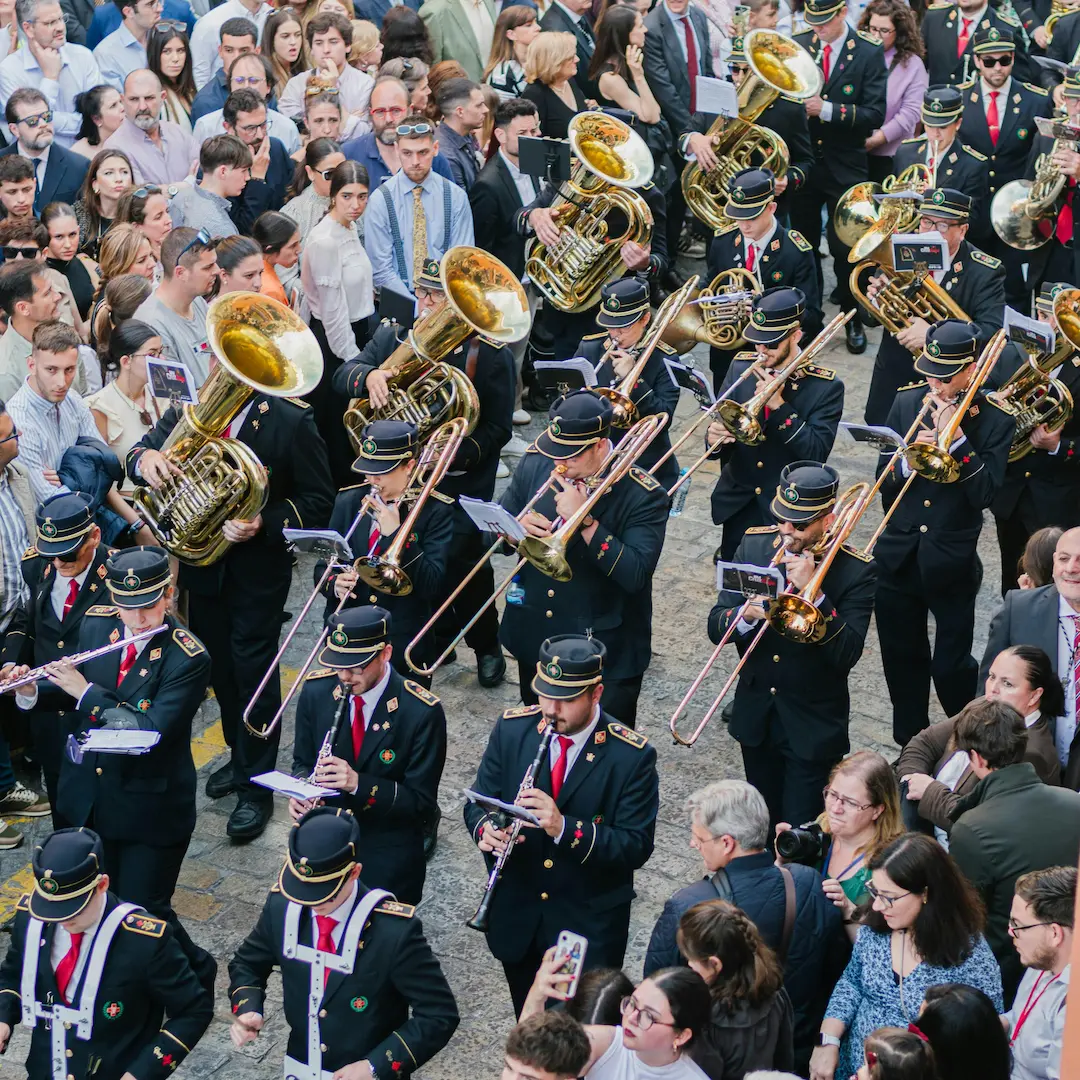
Semana Santa — Holy Week — commemorates the final days of Easter in the Christian calendar, but in Andalucía it extends far beyond religion.
Across the region, centuries-old brotherhoods (cofradías) carry ornate floats (pasos or tronos) through the streets, depicting scenes from the Passion. These processions are accompanied by incense, candlelight, solemn music and moments of complete stillness.
This is not a re-enactment for visitors. It’s a living tradition, woven into the identity of towns and families, repeated year after year with pride, reverence and extraordinary care.
To truly understand what you are seeing, it helps to know the language of the event. You will hear these terms used frequently by locals during the week.
Cofradía / Hermandad: The Brotherhoods. These are the social and religious associations that organise the processions. Membership is often a lifelong commitment passed down through generations.
Trono: In Málaga province, the floats are massive and are called Tronos (Thrones), not pasos. They can weigh several tonnes.
Hombres de Trono: The men and women who carry the Trono. In Málaga, they carry the beams on their shoulders with their faces uncovered, a feat of immense physical endurance.
Nazarenos: The penitents who walk ahead of the float, wearing long robes and the conical hoods (capirotes). The colours of their robes identify which brotherhood they belong to.
Saeta: A moment of pure magic. The procession stops, silence falls, and a single person sings a mournful, flamenco-style prayer to the statue from a balcony.
Mantilla: On Maundy Thursday and Good Friday, you will see local women dressed in black mourning attire, wearing intricate lace veils held up by a high comb.
In 2026, Semana Santa runs from Palm Sunday, 29 March, to Easter Sunday, 5 April.
Key dates to note:
Processions take place throughout the week, but Maundy Thursday and Good Friday evenings are widely regarded as the most powerful and atmospheric.
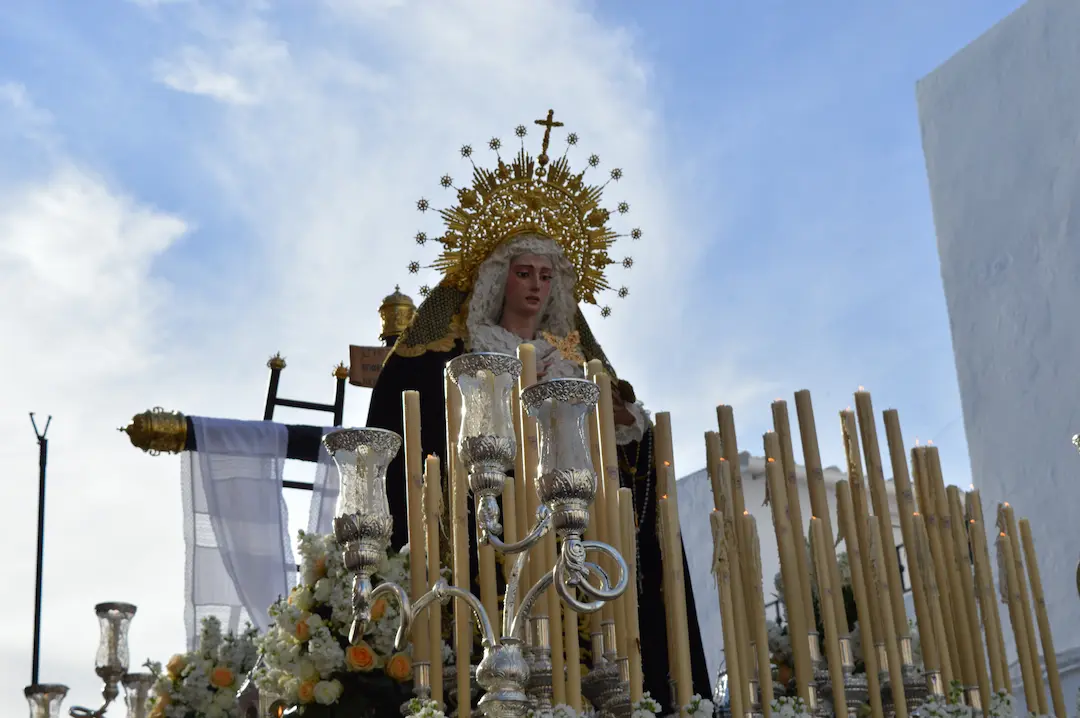
Semana Santa is one of those experiences people don’t easily forget — even if they didn’t expect to be moved by it.
A float emerges slowly from a narrow street. Drums beat in unison. Hundreds of candles flicker against stone façades. The crowd falls quiet, not because they’re told to, but because it feels right.
For visitors, it’s a rare opportunity to witness tradition at its most authentic. For those considering a move, it’s often the moment winter and early spring suddenly feel meaningful — not something to endure.
Semana Santa is felt across the entire Costa del Sol, but each location offers a very different experience.
Some places are grand and theatrical. Others are intimate and deeply local. Choosing where to watch is as important as choosing when.
Below are recommended ways to experience Holy Week in four key locations — whether you’re visiting for a few days or quietly testing what everyday life here might feel like.
Málaga hosts one of the most significant Semana Santa celebrations in Spain — grand in scale, emotionally intense and meticulously organised.
Best days to plan around (2026):
On Maundy Thursday morning, Málaga comes alive early with the Legion’s arrival and the transfer of Cristo de la Buena Muerte — one of the city’s most recognisable Holy Week moments.
In the evening, processions follow the official city route through Plaza de la Constitución, Calle Larios, Alameda Principal and the Cathedral area. While Calle Larios is iconic, many locals prefer areas like Carretería or the Tribuna de los Pobres, where the atmosphere is intense but less restrictive.
On Easter Sunday, the procession of El Resucitado begins mid-morning and brings a completely different tone — light, open and celebratory.
For those drawn to urban energy balanced with tradition, this is Málaga at its most expressive. You can explore what everyday life looks like beyond the processions in our Moving and Settling in Málaga Province guide, or browse Costa del Sol property options to compare city and coastal living.
Marbella’s Semana Santa is quieter and more intimate — and for many, more moving because of it.
The best way to experience it is by basing yourself in or near the Old Town, focusing on processions around the Iglesia de la Encarnación. Narrow streets, candlelight and silence create a powerful atmosphere without the scale of Málaga.
On key evenings, particularly Good Friday, routes pass through Plaza de los Naranjos and surrounding streets, where it feels less like an event and more like a shared moment.
If you have more time, consider:
This experience resonates strongly with buyers drawn to walkable living, historic centres and year-round atmosphere. Explore this further via our Marbella property pages, or compare it with nearby coastal areas across the Costa del Sol.
Mijas offers one of the most authentic Semana Santa experiences on the coast.
In Mijas Pueblo, arrive in the late afternoon, wander the village, then choose a single viewing point near the church or main plaza and stay as evening falls. The setting is dramatic, but the pace is unhurried.
In La Cala de Mijas and Las Lagunas, processions are easier to access, flatter and more family-friendly — ideal for those who want tradition without logistical stress.
Rather than trying to see everything, locals here tend to commit to one procession and make an evening of it — something visitors often find unexpectedly powerful. This is often where lifestyle curiosity begins to turn into intent. You can explore homes in Mijas Costa, La Cala de Mijas, or the wider Mijas area to see how this rhythm fits into everyday life.
Fuengirola sits neatly between Málaga’s scale and Mijas’ intimacy.
Processions are well attended, lively and easy to reach, making this a popular choice for visitors staying locally or those wanting a vibrant but manageable Holy Week experience.
Choose one evening — often Good Friday — and follow a single procession rather than moving around. Fuengirola works best when you settle into the rhythm of one route, with time either side to enjoy cafés or the promenade.
For many UK and EU visitors, Fuengirola is where familiarity starts to feel like possibility. If that resonates, our Fuengirola property pages and broader relocation guides offer a natural next step.
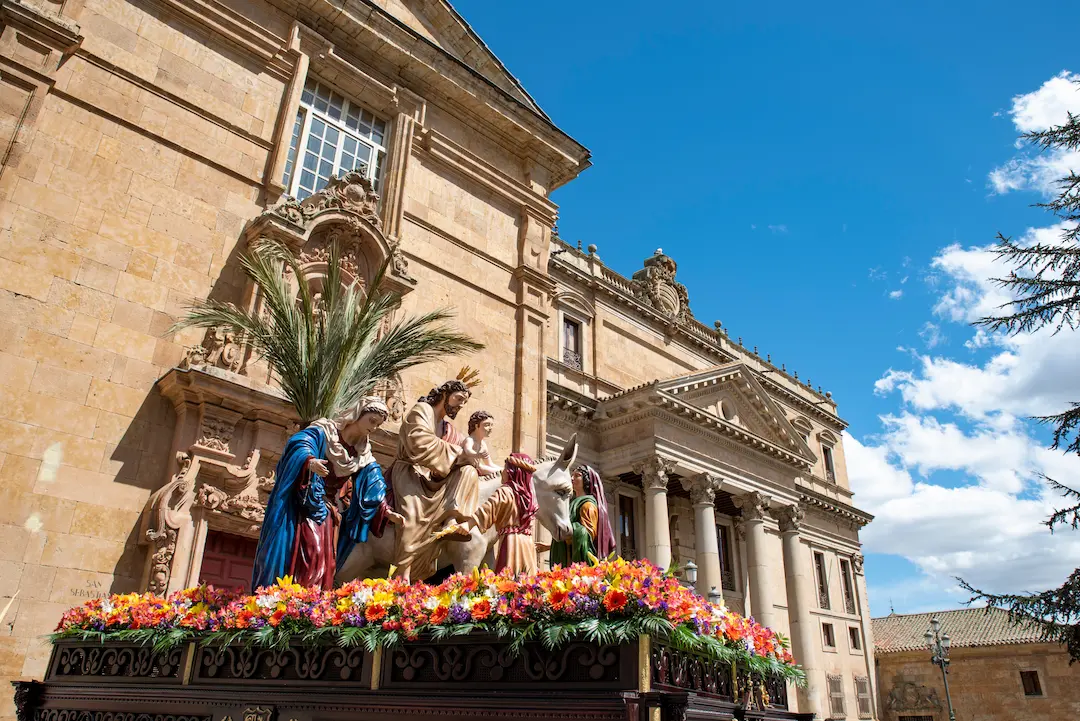
No matter where you choose to go, there are universal realities to the experience. It is important to balance the romance with practical expectations.
The Atmosphere: There is a unique scent in the air—a mix of incense, orange blossom, and melting wax. It is unmistakable.
The Emotion: Even if you aren’t religious, the sight of a thousand people falling silent simultaneously is deeply moving.
The Community: This is a multi-generational event. You will see grandmothers, teenagers, and toddlers all sharing the same tradition.
The Crowds: Especially in Málaga, the crowds can be immense. Personal space is limited in the city centre.
The Logistics: Parking is difficult, and many streets are closed to traffic. GPS often fails to account for procession routes. We strongly recommend public transport or parking on the outskirts.
The Waiting: Processions move slowly. Be prepared to stand for long periods.
The Wax: The streets become slippery with wax from thousands of candles. Wear shoes with good grip.
This is not something to rush.
Semana Santa isn’t about explanation. It’s about atmosphere.
At PCC Property, we understand that falling in love with the culture is often the first step toward moving here. But navigating the property market requires local expertise and trusted guidance.
We don’t just sell homes; we help you build a life here.
We live here, we raise our families here, and we know the coast inside out.
For many people considering life on the Costa del Sol, Semana Santa becomes a turning point.
It shows that this region isn’t defined solely by beaches or summer — but by tradition, rhythm and community. Winter and early spring are culturally rich, emotionally engaging and deeply social.
This is the kind of lifestyle detail you don’t find in checklists or relocation forums. You find it by being here — in the street, at the right moment, among the community.
Check out our detailed area guides along the Costa del Sol and Algarve.
Keep up to date with property news along the Costa del Sol with our blogs.
At PCC Property we don’t just list properties, we unlock lifestyle dreams, Discover how our sales-only, lifestyle-first approach is different.
Who we are
Discover more on our commitment to transparency, trustworthy advice and delivering exceptional client service.